Buy propsy.eu ?
We are moving the project
propsy.eu .
Are you interested in purchasing the domain
propsy.eu ?
domain@kv-gmbh.de · 0541-91531010
Buy propsy.eu ?
'Will + participle 2?'
"Will + participle 2" is a construction used to form the future perfect tense in English. It is used to indicate an action that will be completed before a specific point in the future. This construction is formed by using the auxiliary verb "will" followed by the past participle of the main verb. For example, "By the time you arrive, I will have finished my homework." **
What are the Latin forms of the present participle, perfect passive participle, and future active participle?
The Latin present participle is formed by adding -ns, -ntis to the present stem of the verb. For example, the present participle of the verb "amo" (I love) is "amans, amantis" (loving). The perfect passive participle is formed by adding -us, -a, -um to the verb stem. For example, the perfect passive participle of the verb "amo" is "amatus, amata, amatum" (loved). The future active participle is formed by adding -urus, -ura, -urum to the verb stem. For example, the future active participle of the verb "amo" is "amaturus, amatura, amaturum" (about to love). **


Similar search terms for Participle
Top-Angebote
Products related to Participle:
-
Numskull Designs Fortnite Light Gaming Locker - LED Lighting - Storage for Games and AccessoriesKeep your gaming setup organized with the officially licensed Fortnite Light Gaming Locker from Numskull. This storage locker is designed to hold your games, controllers, headphones, and smaller gaming accessories. It features a practical storage space with Fortnite artwork and integrated LED lighting that can be controlled with a touch. The locker can store up to 10 games or films, holds up to four controllers, and has top-mounted headphone storage. The adjustable or removable internal shelving allows you to configure the space to fit your needs, and the magnetic door closure keeps everything secure. The locker is powered via USB-C and comes with a supplied cable. Made from plastic, this locker provides dedicated space for your gaming essentials, including a lower drawer for storing cables, remotes, and other smaller items. The illuminated Fortnite panel adds a distinctive display feature to a gaming room or entertainment area.28,25 £*Shipping: 3,95 £Secure redirect to the provider
-
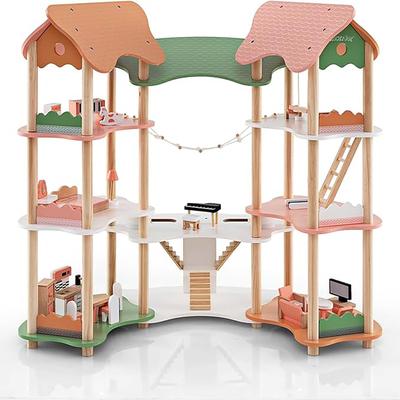
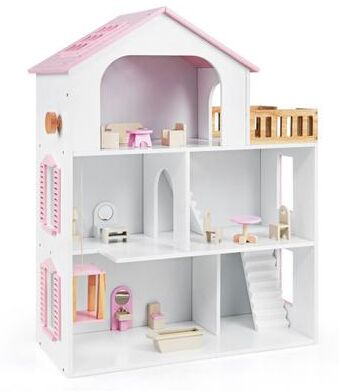
Kids Wooden Dollhouse Aged 3-8 w/ 32PCS Furniture AccessoriesGift your kids an enchanting world with our doll house! Featuring 3 tiers and 7 rooms, our doll house playset turns any nook of your child's room into a whimsical haven of delight.162,99 $*Shipping: 0,00 $Secure redirect to the provider
-
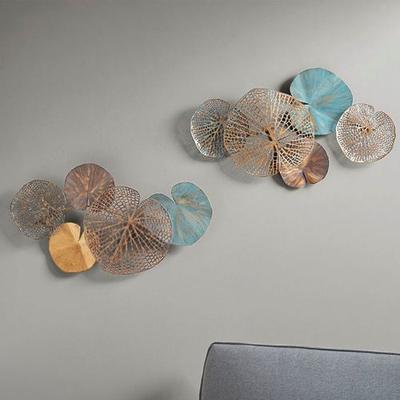
Jla Home/Furniture & Decor Orlena Wall Art Multi Metallic Set of Two, Set of Two, Multi MetallicThe Orlena Wall Art Set offers a stylish take on charming nature. Embracing abstract allure, the metal wall art set features lily pad-inspired shapes in solid and openwork laser-cut patterns. Intriguing tones of gold, white, taupe, light gray, and...89,00 $*Shipping: 15,95 $Secure redirect to the provider

-
What are participle clauses?
Participle clauses are a type of clause that uses a present participle (-ing form) or a past participle (-ed form) to provide additional information about the subject of the main clause. They can be used to show simultaneous actions, cause and effect, or to provide descriptive details. For example, in the sentence "Feeling tired, she decided to go to bed," the participle clause "Feeling tired" provides additional information about the subject "she." **
-
What is a participle?
A participle is a form of a verb that can function as an adjective or be part of a verb phrase. There are two types of participles in English: the present participle, which ends in -ing (e.g. "walking"), and the past participle, which can end in -ed, -en, -d, -t, -n, or -ne (e.g. "broken"). Participles are used to modify nouns or pronouns, and they can also be used to form verb tenses such as the present perfect or past perfect. **
-
What is the difference between the past participle and the present participle?
The past participle is a verb form used to indicate a completed action or state that occurred in the past. It is often used with auxiliary verbs to form the perfect tenses (e.g., "has eaten," "had gone"). The present participle, on the other hand, is a verb form used to indicate an ongoing action or state in the present or future. It is formed by adding "-ing" to the base form of the verb and is used to create the progressive tenses (e.g., "is eating," "will be going"). **
-
How can the terms premature, simultaneous, and subsequent be explained in relation to past participle, present participle, and future participle?
The terms premature, simultaneous, and subsequent can be explained in relation to past participle, present participle, and future participle based on their timing in relation to the action of the verb. The past participle refers to an action that has already been completed, making it premature in relation to the present moment. The present participle refers to an action that is happening at the same time as something else, making it simultaneous. The future participle refers to an action that will happen at a later time, making it subsequent to the present moment. These terms help to clarify the timing of the action in relation to the verb. **

What is a substantivized participle?
A substantivized participle is a verb form that has been turned into a noun by adding a definite article and declining it for case, gender, and number. In other words, it is a participle that has been transformed into a noun and can function as a subject, object, or complement in a sentence. This process allows the participle to take on the characteristics of a noun while still retaining some of its verbal qualities. **
What is a nominalized participle?
A nominalized participle is a verb form that has been turned into a noun. This is done by adding a suffix to the participle form of the verb, which allows it to function as a noun in a sentence. Nominalized participles are commonly used in various languages to express actions or qualities in a more abstract or general way. **
Top-Angebote
Products related to Participle:
-
Jla Home/Furniture & Decor Faye Ginkgo Leaves Wall Art Gold , GoldThe Faye Ginkgo Wall Art decorates with a delicate look of luxury. Made of metal, this wall sculpture, by Martha Stewart, features six ginkgo leaves with a gold foil finish. Measures 43 Wx2 Dx24 H. Metal wall art by Martha Stewart Features elegant...76,99 $*Shipping: 0,00 $Secure redirect to the provider
-
Jla Home/Furniture & Decor Tree of Life Wall Art Decor Walnut Set of Three, Set of Three, WalnutNature's beauty fans out among us like the Tree of Life. This stunning wooden wall art set features a tree in a natural walnut wood tone on a contrasting white background. This dimensional wall panel set transforms any space with elegance. Each...99,00 $*Shipping: 0,00 $Secure redirect to the provider
-
Numskull Designs Fortnite Light Gaming Locker - LED Lighting - Storage for Games and AccessoriesKeep your gaming setup organized with the officially licensed Fortnite Light Gaming Locker from Numskull. This storage locker is designed to hold your games, controllers, headphones, and smaller gaming accessories. It features a practical storage space with Fortnite artwork and integrated LED lighting that can be controlled with a touch. The locker can store up to 10 games or films, holds up to four controllers, and has top-mounted headphone storage. The adjustable or removable internal shelving allows you to configure the space to fit your needs, and the magnetic door closure keeps everything secure. The locker is powered via USB-C and comes with a supplied cable. Made from plastic, this locker provides dedicated space for your gaming essentials, including a lower drawer for storing cables, remotes, and other smaller items. The illuminated Fortnite panel adds a distinctive display feature to a gaming room or entertainment area.28,25 £*Shipping: 3,95 £Secure redirect to the provider
-
Kids Wooden Dollhouse Aged 3-8 w/ 32PCS Furniture AccessoriesGift your kids an enchanting world with our doll house! Featuring 3 tiers and 7 rooms, our doll house playset turns any nook of your child's room into a whimsical haven of delight.162,99 $*Shipping: 0,00 $Secure redirect to the provider
-
'Will + participle 2?'
"Will + participle 2" is a construction used to form the future perfect tense in English. It is used to indicate an action that will be completed before a specific point in the future. This construction is formed by using the auxiliary verb "will" followed by the past participle of the main verb. For example, "By the time you arrive, I will have finished my homework." **
-
What are the Latin forms of the present participle, perfect passive participle, and future active participle?
The Latin present participle is formed by adding -ns, -ntis to the present stem of the verb. For example, the present participle of the verb "amo" (I love) is "amans, amantis" (loving). The perfect passive participle is formed by adding -us, -a, -um to the verb stem. For example, the perfect passive participle of the verb "amo" is "amatus, amata, amatum" (loved). The future active participle is formed by adding -urus, -ura, -urum to the verb stem. For example, the future active participle of the verb "amo" is "amaturus, amatura, amaturum" (about to love). **
-
What are participle clauses?
Participle clauses are a type of clause that uses a present participle (-ing form) or a past participle (-ed form) to provide additional information about the subject of the main clause. They can be used to show simultaneous actions, cause and effect, or to provide descriptive details. For example, in the sentence "Feeling tired, she decided to go to bed," the participle clause "Feeling tired" provides additional information about the subject "she." **
-
What is a participle?
A participle is a form of a verb that can function as an adjective or be part of a verb phrase. There are two types of participles in English: the present participle, which ends in -ing (e.g. "walking"), and the past participle, which can end in -ed, -en, -d, -t, -n, or -ne (e.g. "broken"). Participles are used to modify nouns or pronouns, and they can also be used to form verb tenses such as the present perfect or past perfect. **
Similar search terms for Participle
-
Jla Home/Furniture & Decor Orlena Wall Art Multi Metallic Set of Two, Set of Two, Multi MetallicThe Orlena Wall Art Set offers a stylish take on charming nature. Embracing abstract allure, the metal wall art set features lily pad-inspired shapes in solid and openwork laser-cut patterns. Intriguing tones of gold, white, taupe, light gray, and...89,00 $*Shipping: 15,95 $Secure redirect to the provider
-
Perfect Picks Market Cute Duck Car Ornament Set Fun Dashboard Decor Accessories Cute Duck Car Ornament Set Fun Dashboard Decor AccessoriesAdd a playful touch to your ride with these adorable car dashboard decorations that instantly brighten your mood. Designed for drivers who love personality and charm, this 5piece duck set turns any car interior into a cheerful space. Each piece is...29,97 $*Shipping: 0,00 $Secure redirect to the provider
-
What is the difference between the past participle and the present participle?
The past participle is a verb form used to indicate a completed action or state that occurred in the past. It is often used with auxiliary verbs to form the perfect tenses (e.g., "has eaten," "had gone"). The present participle, on the other hand, is a verb form used to indicate an ongoing action or state in the present or future. It is formed by adding "-ing" to the base form of the verb and is used to create the progressive tenses (e.g., "is eating," "will be going"). **
-
How can the terms premature, simultaneous, and subsequent be explained in relation to past participle, present participle, and future participle?
The terms premature, simultaneous, and subsequent can be explained in relation to past participle, present participle, and future participle based on their timing in relation to the action of the verb. The past participle refers to an action that has already been completed, making it premature in relation to the present moment. The present participle refers to an action that is happening at the same time as something else, making it simultaneous. The future participle refers to an action that will happen at a later time, making it subsequent to the present moment. These terms help to clarify the timing of the action in relation to the verb. **
-
What is a substantivized participle?
A substantivized participle is a verb form that has been turned into a noun by adding a definite article and declining it for case, gender, and number. In other words, it is a participle that has been transformed into a noun and can function as a subject, object, or complement in a sentence. This process allows the participle to take on the characteristics of a noun while still retaining some of its verbal qualities. **
-
What is a nominalized participle?
A nominalized participle is a verb form that has been turned into a noun. This is done by adding a suffix to the participle form of the verb, which allows it to function as a noun in a sentence. Nominalized participles are commonly used in various languages to express actions or qualities in a more abstract or general way. **
* All prices are inclusive of VAT and, if applicable, plus shipping costs. The offer information is based on the details provided by the respective shop and is updated through automated processes. Real-time updates do not occur, so deviations can occur in individual cases. ** Note: Parts of this content were created by AI.